

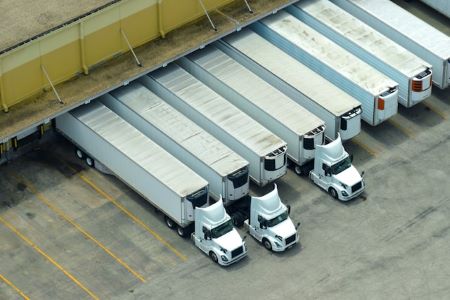
Warehouse operations have always had to deal with variation, but in recent years that variation has become harder to predict and much more uneven in its impact. One of the less visible consequences is how differently manual handling equipment is now being used from one week to the next.
For Midland Pallet Trucks, the issue goes beyond how much stock is moving through warehouses: the true challenge is how inconsistently it arrives.
When the Warehouse Rhythm Breaks
Traditionally, inbound goods followed a fairly stable rhythm. Even when volumes were high, there was a sense of predictability: deliveries arrived in planned windows, were processed in sequence, and equipment workloads remained relatively balanced across the day.
That rhythm is increasingly being disrupted. Supplier networks are more fragmented, lead times are more variable, and stock often arrives in uneven bursts rather than steady flows.
A warehouse might experience a quiet morning followed by a sudden influx of inbound pallets that need immediate attention; the result is a stop-start operating pattern that is difficult to smooth out in real time.
Workload is No Longer Evenly Distributed
This change has a direct impact on how manual handling equipment is used. Instead of consistent movement throughout a shift, manual handling equipment such as pallet trucks, stacker trucks and lift tables are now often pushed hard during short periods – then left underused as operations catch up or reset.
That uneven distribution of work creates a different kind of operational pressure. It is not necessarily the total workload that has increased, but the concentration of activity within narrower time windows. Equipment is expected to absorb those peaks without slowing down surrounding processes.
The Operational Knock-On Effect
This pattern affects more than just equipment usage. Labour planning becomes harder to stabilise, space is used less efficiently during peak inbound moments, and internal congestion can build quickly when multiple deliveries arrive close together.
Warehouses increasingly find themselves reacting to inbound flow rather than controlling it. This places more importance on how quickly goods can be moved off the dock and into storage, rather than simply how efficiently they are processed over the course of the day.
Supplier volatility is now becoming a structural feature of modern warehousing, with warehouses adapting to a more irregular operating rhythm. In this environment, manual handling equipment is an important part of the system that absorbs unpredictability – helping maintain flow when the warehouse itself is under uneven pressure.