

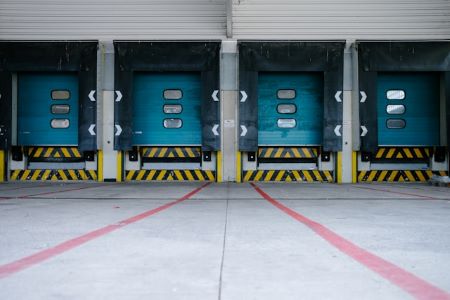
It’s easy to assume that a bigger warehouse will naturally perform better. More space should mean more capacity, smoother movement and fewer constraints. In reality, that isn’t always how things play out. Plenty of well-sized facilities still struggle with delays, and often the problem starts at the loading bay.
For most operations, the loading and unloading area is where everything begins and ends. No matter how efficient the internal layout might be, if goods cannot move in and out smoothly, the rest of the system feels the strain. It’s the one part of the warehouse that everything depends on, yet it’s often the least flexible once in place.
Where Bottlenecks Really Begin
Issues at the loading bay tend to show up as small, repeated delays rather than obvious failures. A trailer takes slightly longer to unload, a pallet needs repositioning before it can be moved, two jobs overlap, and suddenly space feels tight. None of it seems significant on its own, but together it slows the pace of the entire operation.
One of the main challenges is how quickly bays become congested. When multiple deliveries arrive close together, or outbound loads are being staged at the same time, space can disappear fast. Pallets end up waiting in temporary positions, routes become less direct, and operators have to work around obstacles just to keep things moving.
Design Sets the Pace
Phil Chesworth, Managing Director at Midland Pallet Trucks, says this is where design has a lasting impact.
“The loading bay sets the tone for the rest of the warehouse,” he explained. “If that area isn’t working well, everything behind it has to compensate. You might have plenty of space elsewhere, but it doesn’t help if goods can’t move through the entry and exit points efficiently.
“Equipment plays a part in how these spaces function day to day. Pallet trucks are often the first tool used when goods come off a vehicle, and if movement is restricted or awkward, it slows the whole process down. Tight turning areas, uneven surfaces or poorly positioned staging zones can all add friction at exactly the point where speed matters most.”
It’s only when activity increases that weaknesses become obvious. By that stage, teams are often reacting rather than preventing delays – while a more proactive approach can save businesses time and, subsequently, money.