





March rarely passes without its share of heavy rain, and 2026 so far has been particularly wet. For warehouse operators across the UK, persistent wet weather can quickly expose weaknesses in yard operations, as outdoor storage areas and loading yards often face the brunt of seasonal conditions.
Wet surfaces fundamentally change how palletised goods behave in transit. Standing water, saturated ground and slippery concrete reduce traction underfoot and increase resistance under load. What feels like a manageable pallet in dry conditions can become unstable or harder to control once the ground is slick.
Pallet Stability and Surface Conditions
One of the most immediate impacts is on pallet stability. Damp timber absorbs moisture, which can subtly alter weight distribution and weaken boards over time. When combined with heavier seasonal stock such as compost, aggregates or bulk materials, the risk of leaning loads or shifting weight increases. Even slight movement in transit can affect balance, particularly when manoeuvring across uneven yard surfaces.
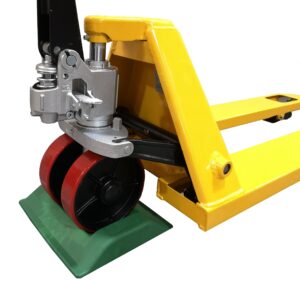
Wheel performance is another area where wet weather makes a noticeable difference. Water and grit can collect around wheel housings, creating drag and reducing smooth rotation. On longer shifts, this added resistance contributes to operator fatigue and slower pallet movement. In some cases, debris carried in from yards can also accelerate wear on bearings and axles, leading to more frequent maintenance issues.
Wheel Performance, Braking and Operator Control
Braking control and stopping distance are often overlooked outdoors. On damp or algae-prone concrete, momentum carries further than expected, especially when handling heavier loads. Compact steering adjustments become more difficult, increasing the likelihood of minor collisions or product damage.
Phil Chesworth, Managing Director at Midland Pallet Trucks, says early spring is an ideal time to reassess yard equipment. “Wet conditions highlight any weakness in your materials handling setup,” he says. “If wheels are worn or hydraulics aren’t performing consistently, it becomes far more obvious in the rain. The key is to anticipate those pressures rather than react to them. Maintaining control outdoors is just as important as efficiency indoors.”
He added that small preventative checks can make a significant difference.
“Attention to pallet handling equipment can help prevent avoidable disruption before peak spring demand fully arrives. Simple steps such as inspecting wheels for debris build-up, checking load stability before movement and ensuring yard surfaces are regularly cleared all contribute to safer operations. Equipment that performs smoothly in challenging conditions reduces strain on operators and helps maintain throughput.”