

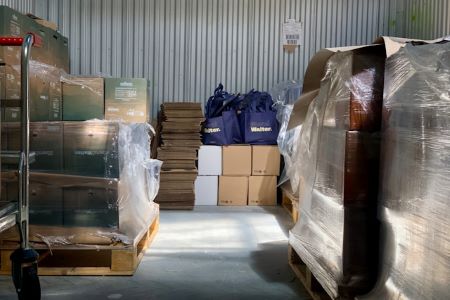
Warehouse layouts used to be built around a fairly simple principle: maximise storage space and keep similar products grouped together. Increasingly, though, that approach is changing. Across the UK, more warehouses are reorganising around fulfilment speed rather than traditional storage logic.
The reason is straightforward: demand patterns have become far less predictable than they once were. Some products move constantly throughout the day, while others may sit untouched for weeks. Treating those items the same way inside the warehouse simply does not work anymore.
What we’ve found is that businesses are paying much closer attention to how often stock moves, not just where it fits. Fast-moving products are increasingly being positioned closer to picking zones, dispatch areas and main traffic routes, while slower-moving stock is pushed further back or higher into storage.
Speed Is Reshaping Warehouse Layouts
This change is partly driven by ecommerce and shorter delivery expectations. Warehouses are under growing pressure to reduce picking times and keep goods flowing smoothly, particularly during busy periods. If frequently ordered products are buried deep inside storage areas, operators spend more time travelling than handling.
Managing Director Phil Chesworth says many warehouses are beginning to think differently about space.
“Historically, layout decisions were often based around storage efficiency alone,” he explained. “Now the focus is much more on movement efficiency. Businesses are looking at which products create the most activity and designing around that.”
That can significantly change traffic patterns inside a warehouse. Instead of movement being spread evenly throughout the building, activity becomes concentrated around high-demand stock zones. As a result, handling equipment often works harder in specific areas – particularly near dispatch and replenishment routes.
Managing Two Different Workflows
Separating fast-moving and slow-moving stock can improve throughput, but it also introduces new challenges. Warehouses effectively begin operating two different workflows within the same building. One side prioritises rapid access and constant movement, while the other focuses on stable long-term storage.
This can create congestion if layouts are not planned carefully. Fast-moving zones require wider access routes, quicker replenishment and more frequent pallet handling. Meanwhile, slower stock still needs to remain accessible without interfering with day-to-day flow.
Handling equipment plays an important role in making these systems work. The more movement-focused a warehouse becomes, the more important smooth handling is. So, if operators are constantly repositioning high-demand stock, equipment reliability and manoeuvrability become a much bigger factor.
If you’re rethinking how your warehouse handles stock, browse our range of high-quality pallet trucks, high lift pallet trucks, and electric stacker trucks. Held in stock in our West Midlands warehouse, we offer fast delivery around the UK.